
On this page
- Q.1. What is Meant by a Security Framework?
- Q.2. What are The Four Themes of The Security Framework?
- Q.3. What is The "Default Security Measures" Theme in The Security Framework?
- Q.4. What is The "Secure Deployment Practices" Feature in SQL Server 2012's Security Framework?
- Q.5. What is The "Secure Communications" Theme in SQL Server 2012's Security Framework?
- Q.6. How Does SQL Server Reduce The Attack Surface?
- Conclusion
Q.1. What is Meant by a Security Framework?
Ans: In 2003, Microsoft launched the Trustworthy Computing initiative with the goal of enhancing user comfort when using computer-powered devices and software. For more details on this initiative, visit http://www.microsoft.com/about/twc/en/us/default.aspx. As a result of this effort, Microsoft SQL Server 2012 incorporates the Security Framework..
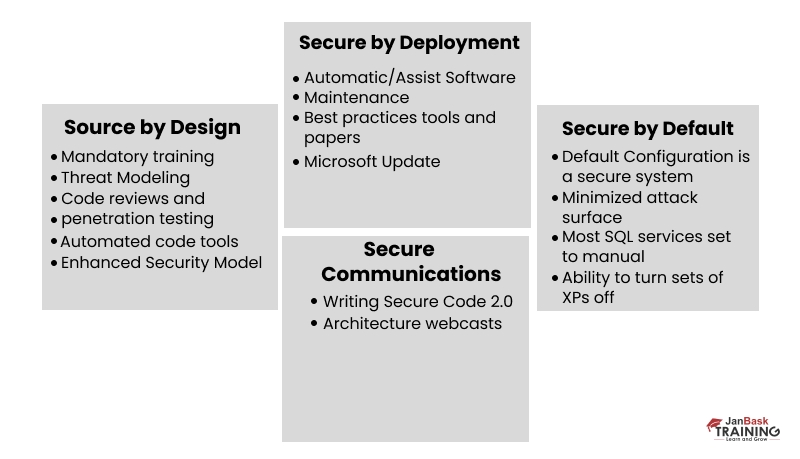
The Security Framework in SQL Server 2012.
Q.2. What are The Four Themes of The Security Framework?
Ans: The Security Framework consists of four key themes:
- Designing for Security
- Default Security Measures
- Secure Deployment Practices
- Ensuring Secure Communications
- What is Meant by the "Designing for Security" Theme in the Security Framework?
Security has always been a design consideration in previous SQL Server versions. With SQL Server 2005, the development team prioritized security alignment. This involved mandatory security training for the entire team, creating threat models for all components and features, and thoroughly reviewing the product's code for security aspects. Microsoft's commitment to security is evident, with SQL Server feature designers emphasizing security in their final designs. Enhance your knowledge of security frameworks through SQL certifications.
Q.3. What is The "Default Security Measures" Theme in The Security Framework?
Ans: A notable aspect of the Security Framework within SQL Server is its "Secure by Default" approach. You can experience this by installing SQL Server with its default settings. Notably, SQL Server 2000 and earlier versions had services like SQL Server Agent deactivated by default. Additionally, certain features like xp_cmdshell and OPENROWSET queries were also disabled. This "off by default" approach aims to minimize the potential attack surface, leading to security improvements throughout the product.
Q.4. What is The "Secure Deployment Practices" Feature in SQL Server 2012's Security Framework?
Ans: Effective deployment of SQL Server in production environments can be challenging due to diverse configurations and features. SQL Server 2012 is now integrated into Microsoft Update, streamlining access to the latest patches. Seeking further insights? Explore Online SQL training courses.
Q.5. What is The "Secure Communications" Theme in SQL Server 2012's Security Framework?
Ans: Even before the public release of SQL Server 2005, extensive technical resources were available, including white papers, webcasts, and active newsgroups, to educate and assist beta users. Many of these resources have been updated and expanded, providing comprehensive educational content.
Q.6. How Does SQL Server Reduce The Attack Surface?
Ans: Analogous to having fewer doors in your home reducing vulnerability, SQL Server reduces its attack surface by disabling optional features. Notable examples include the SQL Server Agent service, SQL Server Browser service, and functions like xp_cmdshell and CLR integration.
In SQL Server 2005, the system-stored procedure "sp_configure" enabled the programmable activation and deactivation of many features. While the Surface Area Configuration Tool in SQL Server 2005 gave way to the Surface Area Configuration facet within the Policy-Based Management Framework (PBM) in SQL Server 2008, PBM provided a means to define and enforce management policies across different environments.
Conclusion
Ans: In the ever-evolving landscape of technology, security stands as an unyielding pillar, safeguarding our digital assets and information. The Security Framework embedded within SQL Server represents a conscious and determined effort by Microsoft to fortify the integrity and protection of its database systems.As we've journeyed through the core themes of this framework – from "Designing for Security" to "Secure Deployment Practices" – it's evident that security is not an afterthought but a fundamental consideration throughout the development and implementation process. By default, SQL Server takes proactive measures to reduce vulnerability, minimizing the potential attack surface and promoting a safer environment for both creators and users.
The "Secure Communications" aspect reiterates Microsoft's commitment to knowledge dissemination and empowerment, providing extensive educational resources even before the product's release. This ensures that users are well-equipped to harness the power of SQL Server while maintaining robust security measures.To enhance your understanding of this intricate world of security frameworks, consider enrolling in online SQL training courses. These resources offer a deep dive into the principles and practices that can significantly strengthen your grasp of securing SQL Server environments.In a digital era characterized by constant innovation and connectivity, safeguarding sensitive information is paramount. The Security Framework within SQL Server exemplifies Microsoft's dedication to staying one step ahead in the ongoing battle against cyber threats. By embracing these principles and delving into continuous learning, we can collectively contribute to a safer, more secure digital landscape for generations to come.



 Upcoming Class : November 3